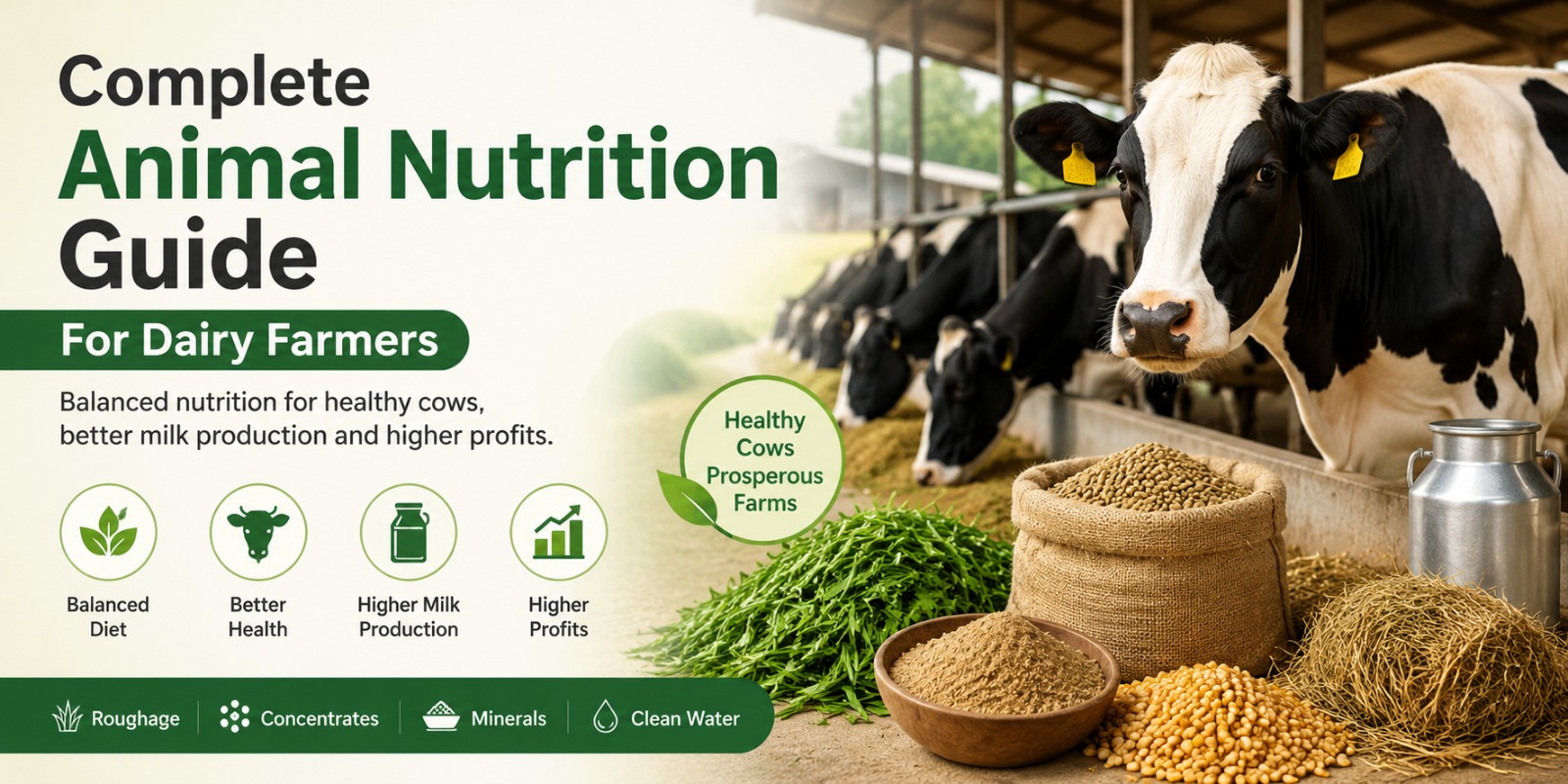
Complete Animal Nutrition Guide for Dairy Farmers
Proper animal nutrition is the foundation of a successful dairy farm. A well-balanced diet not only improves milk production but also supports healthy growth, strong immunity, better fertility, and overall animal well-being. Dairy cattle require the right combination of energy, protein, fiber, vitamins, minerals, and clean water to perform at their best.
The nutritional needs of dairy animals vary depending on their age, breed, body weight, pregnancy stage, and milk production level. Calves need nutrient-rich feed for healthy growth, while lactating cows and buffaloes require higher levels of energy and protein to sustain milk production. Pregnant animals also need additional nutrients to support fetal development and prepare for lactation.
A complete feeding program should include high-quality green fodder, dry roughage, concentrate feed, mineral mixture, and unlimited access to fresh, clean drinking water. Green fodder supplies essential vitamins and improves digestion, while dry fodder maintains healthy rumen function. Concentrates provide additional energy and protein, especially for high-yielding dairy animals. Mineral mixtures and salt help prevent nutritional deficiencies that can affect milk yield, fertility, and overall health.
Maintaining a consistent feeding schedule is equally important. Feeding animals at the same time each day reduces stress, improves feed intake, and promotes efficient digestion. Clean feeding equipment and proper storage of feed also help maintain feed quality and reduce the risk of contamination or spoilage.
Farmers should regularly monitor the body condition, appetite, and milk production of each animal to identify nutritional deficiencies or health issues early. Adjusting the diet according to seasonal changes, lactation stage, and production goals ensures that cattle receive the nutrients they need throughout the year.
By providing balanced nutrition, maintaining proper feeding practices, and ensuring access to clean water and quality feed, dairy farmers can improve milk production, enhance reproductive performance, strengthen immunity, reduce disease risk, and increase the overall profitability of their dairy farm.